
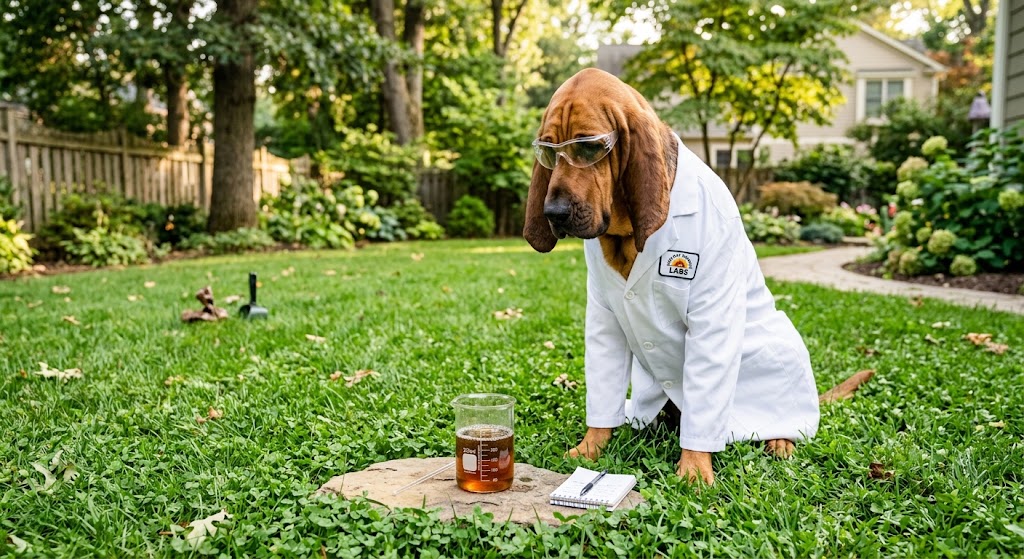
We all love a green, pristine lawn, but keeping the yard clear of dog waste isn’t just about avoiding an unlucky step—it’s actual biology.
Here is what the science says about what happens when pet waste sits in the yard:
- The Nitrogen Myth: A common misconception is that dog waste acts as a natural fertilizer like cow manure. In reality, because dogs eat a high-protein diet, their waste is extremely high in nitrogen and acidity. Left untreated, it creates “nitrogen burns” that leave yellow and brown dead patches in your turf.
- Microscopic Passengers: According to the U.S. Environmental Protection Agency (EPA), a single gram of dog waste can contain over 23 million bacteria, including E. coli and fecal coliforms.
- Soil Longevity: Common soil-borne parasite eggs (like roundworms and hookworms) can remain viable in dirt for long periods. Regular removal breaks the cycle before eggs can mature in the ground.
- The Stormwater Factor: When it rains, leftover waste breaks down into runoff water, carrying unwanted nutrients and bacteria into local groundwater and drainage systems.
The Bottom Line:
Consistent waste removal is the easiest way to protect your lawn’s root system, keep soil healthy, and maintain a clean space for pets and families to enjoy all season long.
Need a hand keeping your yard in peak condition? Dog Day Sunrise has you covered. 🐾
